An interesting lesson from a friend of mine Sean, I am quite sure KOC will elaborate this wonderful Biomechanics catalog written by a Japanese Biomechanist.
It is pretty much a comprehensive system and it first start with a list of exercise to determine your biomechanical type. Once you had worked out the type that you belonged to, you can then look up your compatible Impact Fix, setup, release type and rotation balance.
So are we sure, we are using the correct impact fix?
__________________
I am not East Coast nor West Coast... I stick to the MIDLAND
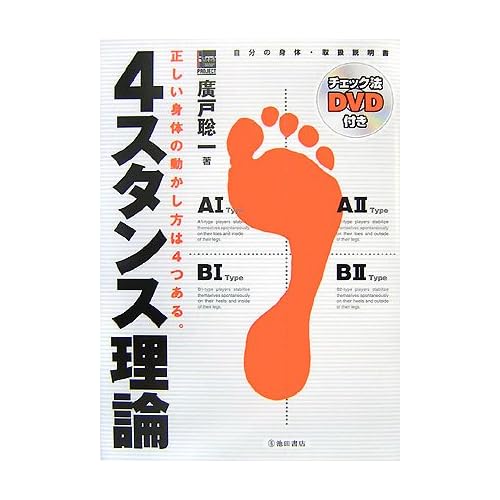
It is called “4 stance theory” written by a sport expert, Soichi Hirot. It is a theory regarding physical characteristics of individual athletes. He concluded there are mainly 4 types: A1; A2 and B1 B2.
A type is Front.
B type is Back
Type I is Inner
Type II is Outer
The classification is to be done by some “exercises”. I don’t know Japanese but with the help of an Asia Tour Player Sean, we are of 3 different types. Sean is A2, oztrainee is B2 and I am B1. (I surprised with the real difference)
What that means? It suggested that type A golfer should be pivot around the left side, B1 should be more centre and B2 is quite extreme and should pivot around the right side. I am talking about Hips as pivot reference.
From aiming, address and all the way to finish, the writer suggested a different ways. For example, it was suggested that my hip bone should be behind the heel at setup while oztrainee should be more on top of the heel and lil’ bit forward spine tile at address.
It also classified a few PGA tour players as models:
A1 Adam Scoyt, A2 Tigers Woods; B1 Sergio and B2 Ernie Els. How dare he classify Adam and Tiger to be A1 and A2...
The above is only a brief review. I am not sure it is something like LAW theory by Mike Adam. But it is interesting to see a concept to swing around the right side pivot point.
Any idea here? Homer said we shall comply with physic and geometry, how about physical characteristics of individual athletes?
__________________
If you cannot take the shoulder down the clubshaft plane, you must take along some other path and add compensations - now, instead of one motion to remember, you wind up with at least two!




 Linear Mode


